
There is no single best heating and cooling system for every log cabin. The right choice depends on cabin size, climate, insulation and air sealing, and budget. In short, a small, well insulated cabin is often well served by a single ductless mini-split heat pump; a cold-climate cabin used all winter usually needs a stronger primary heat source, such as a wood stove paired with a heat pump, or a central heat pump or furnace with ductwork; a large cabin with several rooms usually needs zoning or ductwork rather than one heater in one room; and an off-grid cabin needs a system that does not depend on a large, constant electrical supply, which often points to a wood stove or pellet stove, with cooling added only where it is truly needed. The rest of this guide explains why log cabins heat differently, compares each system honestly, and helps you size and maintain the one you choose.
If you own a log cabin and needs a guidance regarding heating and cooling system for your home, you have come to the right place. off the beaten path? No matter it’s for a vacation or you are a resident of it, log cabins have a rural life like environment that’s why lot of people enjoy it because it’s like a simple living. Though to enjoy life in log cabins you have to get in touch with nature and all the modern facilities are not there. So many people are shifting to log cabins for a better and healthy life. In addition, heating and cooling system is a key factor for a happy and comfortable life in a log cabin and it must be added for a comfortable lifestyle.
How to choose at a glance
Start with how the cabin will actually be used, then match the system to that use. The short summary below is a starting point, not a substitute for a heat-loss calculation for your own cabin.
- Small, well insulated cabin, mild or moderate climate: a single ductless mini-split heat pump for heating and cooling, with zoning by room if the plan is split into separate spaces.
- Cold climate, lived in all winter: a primary heat source sized for the coldest weeks, such as a wood stove, a central heat pump, or a furnace, rather than a single small heater asked to do the whole job.
- Large cabin with several bedrooms and bathrooms: ductwork or a multi-zone system, so heat and cool air actually reach the far rooms, not just the main living area.
- Off-grid or unreliable power: a wood stove or pellet stove as the main heat source, and a clear plan for what happens when the power is out. A pellet stove needs electricity to feed pellets and run its fan, so it is not the same as a wood stove in a power cut.
- Weekend or seasonal cabin: a system that can be set back safely when you leave, brought back up to temperature without a long wait, and checked easily on arrival. That is a different job from heating a home that is occupied every day.
- Hot, humid summers: cooling and humidity control matter as much as winter heat. A system that only heats will leave the cabin damp and uncomfortable in summer.
Heating and Cooling Requirements of a Log Cabin
Some log cabins needs central HVAC system, while other needs HVAC in some areas. While searching for a good HVAC system for your log cabin you have to make a choice between heating and cooling systems for your log cabin. The basic purpose of any system is to keep you warm in winters and cool in summers and it’s necessary to check your needs before getting an HVAC system. Some log homes are made for a living purpose, which means that they are occupied by residents whole year and they need a complete HVAC system to enjoy the weather of all seasons.
Some log homes are not used in routine and used by residents twice or thrice a year, for them we need a system which can save energy. Because when cabin is not in use it’s not sensible to run a HVAC system for whole year. While picking up a heating and cooling system it’s important to see how much system capacity will be sufficient for your log home, because picking a large system for small home is just waste of money and energy while picking a smaller system for a larger cabin is also a waste because you will have to spend more money to keep the home warm and comfortable.
How log cabins lose and keep heat
A log cabin does not heat in quite the same way as a framed house, and that changes what a good HVAC choice looks like. A framed wall is usually a thin structure filled with insulation. A log wall is solid wood. Wood insulates, but a log wall on its own generally has a lower R-value, the measure of resistance to heat flow, than a well insulated framed wall of the same thickness. That does not mean a log cabin is cold by nature. It means heat loss through the walls, and heat loss through air leaks, need more attention than they get in a standard house.
Logs also have thermal mass. A thick log wall absorbs heat slowly and gives it back slowly. In practice, a log cabin can feel steady once it is warm, but it can take longer to warm up after a cold weekend away. A system that cycles on and off in short bursts will not use that mass well. A steady, well controlled heat source, and a thermostat that is set with that slow response in mind, usually works better than a heater that is constantly overshooting and shutting down.
Air sealing matters at least as much as the logs themselves. Heat escapes through gaps between logs, around windows and doors, where pipes and wires pass through walls, and at the roof line. Chinking and sealing, good window and door seals, and insulation in the roof and floor, where the structure allows it, reduce the heating load before any system is sized. If those leaks are left open, the cabin will need a larger system, use more fuel or electricity, and still feel draughty near the walls.
Windows deserve a separate look. Large glass areas facing sun can help in winter and overheat a cabin in summer. Shade, ventilation, and a cooling plan that deals with humidity, not just temperature, make a real difference. Ventilation is part of heating and cooling too: a tight cabin still needs fresh air, and a wood stove or furnace still needs a safe supply of air and a safe route for exhaust. A system choice made without thinking about ventilation, humidity, and air sealing is only half a choice.
HVAC System for an Under Construction Log Cabin
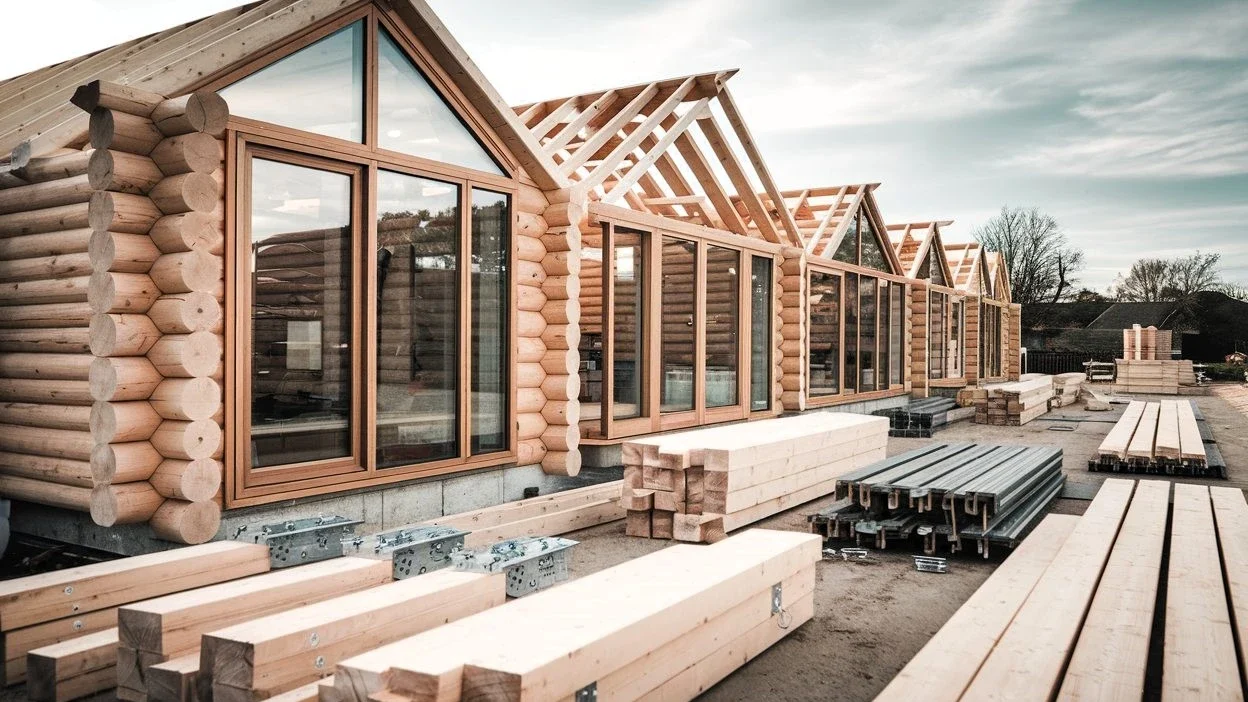
If you’re going to built a new log cabin for you and your family it’s a good time to add a duct system to your log cabin because the log cabin is still in construction and it would be easy for you to accommodate a duct system in your log cabin. HVAC system is the first priority of the log cabin builders and you need to consult with a professional before choosing a HVAC system for your home.
There is one another option for log cabin owners is in floor high technology heating system. Which is also known as radiant heating system. As the name suggests, in this heating system heating coils are fitted in the floor of the log cabin. The radiant heating system is a bit expensive, but it is very effective, in the case you have a proper budget and want to get a modern heating system. Some systems use boiler to heat the water and then circulate it through the floor to heat the cabin. This type of system usually fits in the log cabin design and is best suitable if there are rooms with lot of floor area.
HVAC System for an Existing Log Cabin
There is another option for the people who don’t have already duct system and can’t afford or want to add a duct system for their log cabin, they can add a ductless mini split heating and cooling system. The ductless mini split system has two parts: one part is mounted inside the home and other part is mounted outside of the log cabin. The external part of the system contains a compressor and a fan. The ductless mini split system is very common in log cabins and people can use it in a single room or multiple rooms. It can provide heating and cooling both in the log cabin and you can also use it for zone heating, because if the home has multiple zones, you can use one system to heat or cool multiple zones at a time.
Wall heaters is another heating system used in log cabins to accommodate the people in small areas. Wall heaters are best option for small areas because there is not much heat output needed in small spaces. A wall heater works on electricity and gas. If you live in a small cabin, you can use this heater for your small cabin.
High velocity forced air systems are a ducted option, but the ductwork they use is much smaller than normal duct systems and is much easier to install in a finished cabin. High velocity systems work with forced air and heat pumps and can also cool the cabin.
Handy heaters and air conditioners are another option for heating and cooling of your log cabins. There are two types of portable heaters: electric and oil filled. The main benefit of portable heaters is that you can move them from one place to another. But if you have a large home, portable heaters cannot be used as a primary heating system. They are good to use as secondary heating system. Air conditioners also can be portable and can be used to cool one room at a time.
Heating and cooling systems compared
The table below compares the main log cabin heating systems on the same basis: what each system does, where it fits best, and a typical installed range in the United States. The installed ranges come from Angi cost guides checked on November 5, 2026, and are for the system installation described in each guide, not for a whole turnkey build. The total heating and cooling line for a turnkey build on the site calculator baseline is different, and is given separately in the Costs section below. Do not add a system range to the calculator total, and do not use one system range to price a different system. Actual cost varies by cabin size, climate, region, installer, and system size, so treat every range below as a planning range, not a quote.
| System | Best for | Typical installed range |
|---|---|---|
| Wood stove | Cold climates, off-grid cabins, a main living area | $1,500 to $4,000 |
| Pellet stove | Steady heat in cold to moderate climates, where pellets are available | $1,009 to $3,667 |
| Ductless mini-split heat pump | Small to medium cabins, heating and cooling, room-by-room zoning | $2,000 to $5,000; multi-zone systems can cost more |
| Central heat pump | Medium to large cabins with ductwork, heating and cooling | $4,236 to $7,942; new ductwork can add $2,000 to $7,500 |
| Furnace | Medium to large cabins with ductwork, cold climates, where fuel is available | $2,823 to $6,897 |
| Radiant floor heating | New builds and remodels, comfort underfoot, rooms with large floor areas | $1,653 to $6,656 for a heated floor system; $6 to $20 per square foot |
| Electric baseboard | Small rooms, additions, and backup heat | $420 to $1,526 for a baseboard installation project; electric units $150 to $400 each |
Wood stove
A wood stove burns logs in a closed firebox and gives heat mainly to the room it sits in, with warmth spreading to nearby open rooms. It suits a cold climate and an off-grid cabin because it does not need grid electricity to make heat, and it gives strong, steady warmth in a main living area. Its limits are just as clear: heat does not travel well into closed bedrooms at the far end of a cabin, it needs dry wood, regular loading and ash removal, and a safe chimney. Pros are independence, strong heat, and a simple system with few parts to fail. Cons are uneven heat, daily work in winter, indoor air and safety risks if the stove, chimney, or clearance is wrong, and no cooling at all. Maintenance is chimney cleaning and inspection, door and gasket checks, and keeping the area around the stove clear. Typical installed range, from the Angi wood-burning stove guide checked November 5, 2026: $1,500 to $4,000 for installation, with labour in that guide put at $500 to $3,000. That is a system installation range, not the calculator total for a turnkey build.
Pellet stove
A pellet stove burns small compressed wood pellets fed automatically from a hopper, so heat output is steadier and easier to control than a log fire, and the stove can be set to hold a temperature. It suits a cabin that is lived in regularly in a cold to moderate climate, where pellets are easy to buy and store dry. It still needs electricity for the feed mechanism and fan, so a power cut needs a backup plan, and pellets must be kept dry and in supply. Pros are steadier heat, less frequent loading than a wood stove, and a thermostat-style control. Cons are dependence on electricity and on pellet supply, noise from the fan, and the need for regular cleaning of the burn pot and ash. Maintenance is ash removal, burn-pot cleaning, and annual servicing and vent checks. Typical professional installation range, from the Angi pellet stove guide checked November 5, 2026: $1,009 to $3,667, with a national average in that guide of $2,327.
Ductless mini-split heat pump
A ductless mini-split heat pump moves heat rather than making it from fuel. An outdoor unit connects to one or more indoor heads, each serving a room or zone, and the same system can heat in winter and cool in summer. That makes it a strong fit for heating and cooling a small cabin, for cabins without ductwork, and for cabins where different rooms need different temperatures. Zoning is its main advantage: a bedroom can be cooler than the living room, and an unused room need not be heated at full strength. In very cold weather, heat pump output falls, so a cold-climate cabin may need a cold-climate model, a backup heat source, or both, and the installer should size the system for the coldest expected conditions, not for an average winter day. Pros are heating and cooling in one system, zoning, no ductwork, and good control. Cons are lower output in deep cold, the cost of adding heads for many rooms, and the need for a clear outdoor location and regular filter cleaning. Maintenance is filter cleaning, keeping the outdoor unit clear, and annual checks. Typical professional installation range, from the Angi mini-split guide checked November 5, 2026: $2,000 to $5,000, with a national average in that guide of $3,000. Multi-zone systems can cost more than that range, because each added indoor head adds equipment and work.
Central heat pump and furnace
A central system uses ductwork to send heated or cooled air to every room, which is why it suits a medium to large cabin that is occupied all year. A central heat pump heats and cools through the same ducts, and is a good fit where ductwork already exists or can be fitted during construction. A furnace heats through ducts using gas, oil, propane, or electricity, and is often paired with separate air conditioning for summer. A furnace can be the stronger choice in a very cold climate or where the fuel is readily available, while a heat pump gives both heating and cooling from one outdoor unit. Both need ductwork that is sized, sealed, and balanced, or far rooms will stay cold and the system will work harder than it should. Pros are even heat across rooms, heating and cooling from one duct system in the heat pump case, and a familiar, thermostat-controlled setup. Cons are the cost and disruption of ductwork in an existing cabin, the need for space for ducts and equipment, and, for a furnace, fuel storage and venting. Maintenance is filter changes, duct checks, annual servicing, and, for a furnace, burner and vent checks. Typical ranges, from Angi guides checked November 5, 2026: a professional central heat pump installation $4,236 to $7,942, with a national average in that guide of $6,087, and new ductwork $2,000 to $7,500 extra where it is needed; a new furnace installation $2,823 to $6,897, with a national average in that guide of $4,814. These are separate system ranges, not a combined price, and neither replaces the calculator total for a turnkey build.
Radiant floor heating
Radiant floor heating warms the floor itself, either with electric mats or with warm water circulated through pipes from a boiler, and the floor then warms the room evenly from below. It suits a new build or a major remodel, where the floor can be built around it, and rooms with large floor areas where even, draught-free warmth matters. It is less easy to add to a finished cabin without lifting floors, and it responds slowly, so it suits steady use better than a cabin that is heated up from cold for a single weekend. It also heats only; cooling still needs a separate system. Pros are even comfort, no draughts from blown air, and quiet operation. Cons are slow response, the work of fitting it into an existing floor, and no cooling. Maintenance is boiler and pump checks for a water system, and thermostat and control checks for either type. Typical range, from the Angi radiant floor guide checked November 5, 2026: $1,653 to $6,656 for a heated floor system, at $6 to $20 per square foot. That range is for a heated floor system or area, not necessarily for heating every room of a whole cabin.
Electric baseboard or space heaters
Electric baseboard heaters sit along a wall and warm one room at a time, while portable space heaters, electric or oil-filled, can be moved from room to room. They suit small rooms, an addition, a single bedroom, or backup heat in a cabin that already has a main system. They are simple to install and control room by room, which is their main advantage. Their limit is running cost and capacity: heating a whole cabin with baseboards or portable heaters alone usually costs more to run than a heat pump or stove, and a portable heater cannot be a primary system for a large home, a point the original guide already made. Electrical load matters too: several heaters at once can strain an older panel or a small off-grid supply, so the panel and circuits should be checked before adding heaters. Maintenance is dusting fins, checking controls and cords, and, for a portable heater, keeping it clear of bedding, curtains, and furniture. Typical range for baseboard installation, from the Angi baseboard guide checked November 5, 2026: $420 to $1,526 for a professional baseboard installation project, with a national average in that guide of $973, and electric units $150 to $400 each. A whole cabin fitted with many baseboards will cost more than a single-room project, because each room needs its own units. No verified installed range is published here for a portable space heater on its own, because it is normally a plug-in unit rather than an installed system, so it is described in relative terms only.
Heating and cooling a small cabin
Heating and cooling a small cabin has its own trap: oversizing. A system sized for a large house will heat a small cabin too fast, shut off, and start again, leaving damp air, uneven temperatures, and wasted energy. A system sized for the cabin, with a proper heat-loss check that takes insulation, air sealing, windows, and climate into account, will run longer, steadier cycles and keep humidity in check. That is why a single mini-split or a single wood stove, matched to the cabin, often beats a large central system in a small space.
Zoning helps even in a small cabin if the plan is split into a living area and one or two closed bedrooms. A single head in the living room will not reliably heat a closed bedroom down a hallway, and a door left open is not a heating plan. Two small zones, or a stove in the main room plus a small heater for a bedroom, usually works better than one large heater asked to reach every corner. In a very small, open-plan cabin, one well placed mini-split head or one stove in the main room can be enough, provided the cabin is well sealed and insulated.
Air conditioning for log cabins
Do log cabins need air conditioning? In a mild summer climate, shade, ventilation, and night cooling may be enough. In a hot or humid climate, air conditioning units for log cabins are not a luxury: they control temperature and humidity, protect the logs and furnishings from damp, and make summer living comfortable. Log cabin air conditioning is therefore best chosen as part of the heating system, not as an afterthought.
Mini-split cooling is the most common fit for a cabin without ducts: one or more indoor heads cool the rooms that need it, and the same system heats in winter. Central air, through ducts, suits a larger cabin that already has ductwork for heating. Portable air conditioners can cool one room at a time, but they are a room solution, not a whole-cabin solution, and they need a window or vent route and a way to deal with condensate.
Whatever the type, sizing matters for cooling just as it does for heating: an oversized air conditioner will cool the air quickly, shut off, and leave humidity behind, so the cabin feels cool and clammy. A correctly sized system runs long enough to remove moisture as well as heat. Humidity control, good ventilation, and shade on large glass areas are part of the cooling plan, not extras.
Costs
For a turnkey build, use the site calculator as the primary cost source. The calculator model is based on real cost research, with heating and cooling at $8 per square foot as its base rate, within a research range of $4 to $10 per square foot. A higher $17 to $22 per square foot claim found in that research was flagged as an outlier and is not used in the model.
On the fixed baseline below, the rural location factor brings the calculator line to $8.16 per square foot. That line is the total heating and cooling cost for a turnkey build on that baseline, not the purchase price of one stove, heat pump, or furnace alone. The system installation ranges in the comparison section above are separate, external ranges for individual systems, and they must not be added to, or used to replace, this calculator total. If an external range looks lower than the calculator total, that is expected: one system unit is not the same as the full heating and cooling scope of a turnkey build.
Fixed baseline used for every figure in this section: full turnkey, pine, milled logs, crawl space foundation, Southeast region, standard finish, rural building site, 9 foot walls, 2 bathrooms, 12 percent contingency, and 0 percent DIY labour. The figures below were re-run in the site calculator in this job on November 5, 2026, and matched the figures recorded for this baseline.
| Cabin size | Calculator heating and cooling line |
|---|---|
| 1,000 square feet | $8,160 |
| 1,500 square feet | $12,240 |
| 2,000 square feet | $16,320 |
To check a different size, region, finish, or build type for your own cabin, use the log cabin cost calculator on that same baseline and change only the input you are testing. For the wider build decision, the Log Cabin Kits 101 guide puts heating and cooling in context as one part of a whole kit and build, rather than as a stand-alone purchase.
Installation, safety, and permits
Installation is where a good system choice succeeds or fails. Wood stove clearance is the clearest example: the distance from the stove and its flue to walls, floors, and furniture, the hearth under and around the stove, and any heat shield must follow the stove manufacturer instructions and local code for that stove, not a general rule remembered from another stove. Chimney height, routing, and inspection matter just as much, because a chimney that is too short, blocked, or poorly sealed can spill smoke and carbon monoxide into the cabin. Ventilation must be planned for any fuel-burning system, and a carbon monoxide alarm is a basic safety step, not an optional extra.
Electrical load needs the same check for electric heat. Baseboard heaters, a heat pump, and a furnace fan all draw power, and an older panel, a small service, or an off-grid supply may need an upgrade before new heaters are added. Ductwork, where it is used, needs sealing and balancing, and gas or oil systems need proper venting and leak checks by a qualified installer. Permits and inspections are set locally, so check the local rules for your site before work starts, rather than assuming the rules from another county or state apply. The log cabin local building codes guide explains how those local rules fit into a log cabin build.
Maintenance through the seasons
A short seasonal checklist keeps any system working well, and most of it needs no special tools:
- Autumn, before the heating season: clean or replace filters, check thermostats and zoning controls, inspect the chimney and vents, check wood stove door gaskets, and make sure fuel, pellets, or wood are dry and in supply.
- Winter, while the system is working hardest: keep the area around stoves and heaters clear, watch for draughts at doors and windows, check that the outdoor heat pump unit is clear of snow and debris, and do not block baseboard heaters with furniture or bedding.
- Spring, as heating eases: clean filters again, check ducts and vents for leaks or blockages, service a boiler or furnace if it is due, and check seals and chinking that winter may have opened.
- Summer, before cooling is needed: clean mini-split filters and the outdoor unit, check condensate drains, make sure portable air conditioners have a clear vent route, and check that humidity is being controlled, not just temperature.
- All year: test smoke and carbon monoxide alarms, keep a note of filter sizes and service dates, and book annual servicing for fuel-burning systems, heat pumps, and furnaces rather than waiting for a breakdown in the coldest week.
Log Cabin HVAC / Heating and Cooling Guidance
Its 21st century and the age full of new ideas and techniques. There are so many options available in the market nowadays. When you choose a system for your log cabin, consider your needs, your budget, and the size of your home. It is important to keep in mind the climate of the area where your home is located because it also affects the choice of heating and cooling system.
Frequently asked questions
What is the best heating system for a log cabin?
There is no one best system. For log cabin heating, the best system is the one matched to cabin size, climate, insulation and air sealing, and budget: a mini-split for a small, well insulated cabin, a wood stove or a central system for a cold-climate cabin used all winter, and zoning or ductwork for a large cabin. Start with a heat-loss check, then choose the system that covers the coldest weeks, not just an average day.
Can a mini-split heat a log cabin in winter?
Yes, in many cabins, provided it is sized for winter and the cabin is reasonably sealed and insulated. In mild and moderate climates a mini-split can be the main heat source. In very cold climates, output falls as outside temperature falls, so a cold-climate model, a backup heat source such as a wood stove, or both may be needed. Ask the installer to size for the coldest expected conditions for your site.
Do log cabins need air conditioning?
Not every log cabin does, but many do in hot or humid climates, where cooling and humidity control protect comfort, logs, and furnishings. In a mild summer climate, shade and ventilation may be enough. Where summers are hot and humid, a mini-split or central system that both heats and cools is usually the practical choice, rather than adding a separate cooling system later.
How do you heat a small log cabin?
Heat a small log cabin with a system matched to its size, not oversized for it. A single ductless mini-split heat pump or a single wood stove in the main room often works, with a small heater for a closed bedroom if needed. Seal air leaks, insulate the roof and floor where possible, and use zoning so a closed room is not left cold while the main room overheats.
What size system do I need?
System size depends on cabin size, climate, insulation, air sealing, windows, and ceiling height, not on square footage alone. That is why two cabins of the same size can need different systems. A heat-loss calculation by a qualified installer, using your cabin and site, is the reliable way to size a system. Oversizing wastes energy and leaves humidity behind in cooling; undersizing leaves the cabin cold in the worst weather.
How much does heating and cooling add to a log cabin build?
On the site calculator fixed baseline in the Costs section above, full turnkey, pine, milled logs, crawl space, Southeast, standard finish, rural site, 9 foot walls, 2 bathrooms, 12 percent contingency, and 0 percent DIY labour, the calculator heating and cooling line is $8,160 at 1,000 square feet, $12,240 at 1,500 square feet, and $16,320 at 2,000 square feet. That is the total heating and cooling line for a turnkey build on that baseline, based on real cost research at $8 per square foot, $8.16 per square foot after the rural factor. Individual system installation ranges, from Angi guides checked November 5, 2026, are given separately in the comparison section and must not be confused with this total.